
… and replacing fossil resources the climate-friendly way
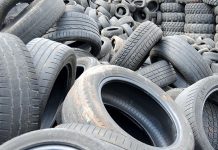
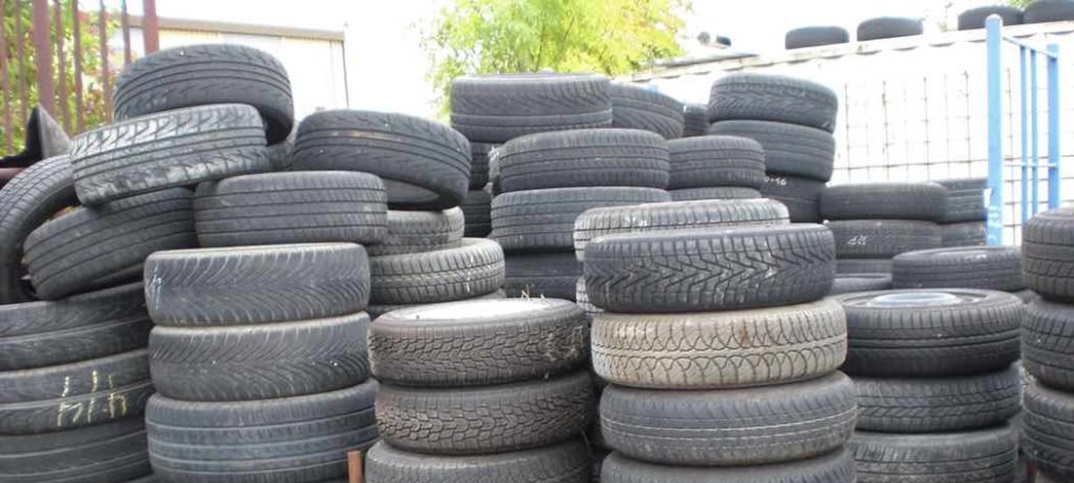
Every year, more than 500,000 tons of end-of-life tyres (ELT) are generated in Germany alone. When tyres can no longer be repaired, retreaded, or reused, they should ideally be processed in a climate-friendly way – preferably through mechanical recycling, but also through chemical recycling when needed. AZuR’s latest video offers an impressive look at how pyrolysis – an advanced chemical recycling process – helps turn waste into valuable raw materials, keeps resources in circulation, and replaces fossil inputs with more climate-friendly alternatives. It’s a major step forward on the path toward a truly circular economy.
From waste to resource: AZuR’s new video breaks down tyre pyrolysis, https://www.youtube.com/watch?v=Y3XHOxw7ys0
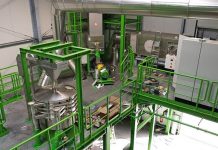
AZuR partners across Germany and Europe are making sure end-of-life tyres are recycled locally – minimizing transport distances and cutting down on emissions. In modern, high-efficiency pyrolysis plants, shredded and granulated ELT rubber is broken down thermochemically at 500 to 700°C, without oxygen. The result? A mix of gas, pyrolysis oil, and solid carbon residue, which is refined into recovered Carbon Black (rCB).
Even better: the gas created during the process can be used to power the pyrolysis system itself – making the entyre operation nearly energy self-sufficient. The condensable portion of the gas turns into pyrolysis oil. This oil allows for the recovery of a large part of the carbon from the tyre’s rubber compounds. In the chemical industry, it’s used as a substitute for fossil carbon and fed into traditional C4 crackers (on a mass-balance basis) to produce monomers.
Recovered carbon black: Climate-friendly alternative to fossil-based carbon black
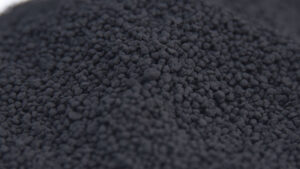
Recovered Carbon Black (rCB) recovers the industrial carbon black originally used in tyre production. It’s finely ground, homogenized, and pelletized into a consistent material that can cut CO₂ emissions by up to 80% when used in new tyres. It’s also used in a wide range of rubber-based products like floor coverings, gaskets, conveyor belts, paints and coatings, sporting goods, and even textiles. Depending on the application, rCB can completely replace traditional fossil-based carbon black.
Turning waste into resources – right here in Europe
Natural and synthetic rubber, along with other fossil-based fillers in tyres, are transformed into valuable new materials in an environmentally responsible way. From just one tyre, pyrolysis can produce roughly 2.5 liters of oil and 3.5 kilograms of recovered Carbon Black.
More and more companies across Germany and Europe are starting to use pyrolysis oil and rCB to cut their reliance on fossil resources, conserve raw materials, and reduce harmful CO₂ emissions. These materials are powerful drivers of the shift toward a real circular economy. Instead of burning fossil resources, we’re putting rubber and carbon from ELTs back into the loop—and giving them new life. That’s a big win for sustainable production.
Pyrolysis: Bridging the gap to a circular future
AZuR’s new film makes one thing clear: tyre pyrolysis isn’t the end of the road – it’s a new beginning. Rubber and carbon stay in use and out of the waste stream, playing a key role in the shift from a linear to a circular economy. With this film, AZuR aims to raise awareness and foster transparency – highlighting the huge potential of tyre pyrolysis as a climate-friendly recycling technology. The message is for everyone: from industry and policymakers to the wider public.
Tyre pyrolysis is a prime example of how innovation can drive circular solutions. AZuR is calling on all of us to take responsibility – for a resource-conscious future, for the next generation, and for our planet.
About the Allianz Zukunft Reifen (AZuR)
Since 2020, AZuR has been working across Europe to promote a sustainable circular economy for tyres. The goal: reuse or recycle 100% of used tyres to reduce waste, cut CO₂ emissions, conserve natural resources, and protect people and the environment., AZuR has been working across Europe to promote a sustainable circular economy for tyres.
With over 80 partners from industry, SMEs, retail, and research, AZuR covers the full spectrum of tyre circularity – from sustainable new tyre production and certified ELT collection to tyre repair, retreading, and both mechanical and chemical recycling of raw materials from end-of-life tyres.
Together, this interdisciplinary network is developing innovative, practical, and eco-smart solutions for a closed-loop tyre economy. Universities in the AZuR network play a key role by providing valuable, research-backed insights to help close the materials loop.
AZuR’s efforts have earned major recognition:
November 2025 – AZuR received the “Cooperation” Special Award at the inaugural NRW Resource Efficiency Awards, hosted by Efficiency Agency NRW (efa).
September 2025 – Winner of the German Sustainability Award for Projects 2025 in the “Overall Concept – NPO” category, honoring AZuR’s unique European-wide tyre and recycling network.
AZuR Network Coordinator Christina Guth won the Recircle Award 2025 in the Women’s Award for the Tyre Retreading Sector category.
November 2023 – AZuR received the European Transport Sustainability Award 2024 for its study on the positive environmental footprint of tyre retreading.
The AZuR model for a circular tyre economy is gaining international attention – and it’s designed to be scalable to other industries and waste streams. Learn more about AZuR: https://azur-netzwerk.de
Source: Allianz Zukunft Reifen (AZuR)