
The Horizon Europe project „Ecopilot“ combines artificial intelligence, sustainability assessment and innovative materials to help companies make better environmental decisions during product design. Aimplas contributes to „Ecopilot“ through the development of innovative CO₂-based coatings and the generation of environmental data for AI-driven sustainability assessment tools.
Aimplas, the Plastics Technology Centre, participates in the European project „Ecopilot“, a Horizon Europe initiative coordinated by the National Technical University of Athens (NTUA) that brings together 14 organisations from across Europe to develop innovative digital tools that support safer and more sustainable furniture and mattress design. „Ecopilot“ is a 36-month Research and Innovation Action that combines sustainability assessment methodologies, artificial intelligence, advanced materials research and digital technologies to help companies make more informed sustainability decisions from the earliest stages of product development.
Life Cycle Assessment (LCA) is an important methodology for evaluating the environmental impacts of products, materials and processes. However, its wider adoption remains limited by data gaps, methodological complexity and the lack of accessible digital tools, particularly for SMEs and organisations without specialised sustainability expertise. „Ecopilot“ aims to address these barriers through its central innovation: a Conversational Product Environmental Footprint (PEF) Copilot tailored specifically to furniture and mattress products.
Instead of requiring users to work with several specialised tools independently, the Copilot will provide guided and conversational workflows that bring together environmental impact assessment, circularity modelling, uncertainty analysis and other advanced sustainability methods. The goal is to make sustainability assessment more transparent, practical and accessible, enabling SMEs, designers and innovators to better understand the environmental implications of their choices and support eco-design and material substitution decisions.
From data gaps to better design decisions
A key part of the project focuses on addressing missing sustainability data for new and emerging materials. „Ecopilot“ is developing PEF-aligned, FAIR-oriented Life Cycle Inventory (LCI) datasets and exploring predictive approaches that can help fill critical data gaps when complete sustainability information is not yet available. The project will also explore the integration of advanced approaches into the Copilot, including dynamic inventories, circularity modelling, uncertainty analysis and indicators based on the Planetary Boundaries framework, which examines environmental pressures in relation to the Earth’s ecological limits.
The project will validate its approach in the furniture and mattress sectors, focusing on applications where safer and more sustainable material alternatives are increasingly important. These include coatings for wood and metal components, furniture adhesives, and flame retardants used in textiles and foams.
Embedding sustainability into product design from day one
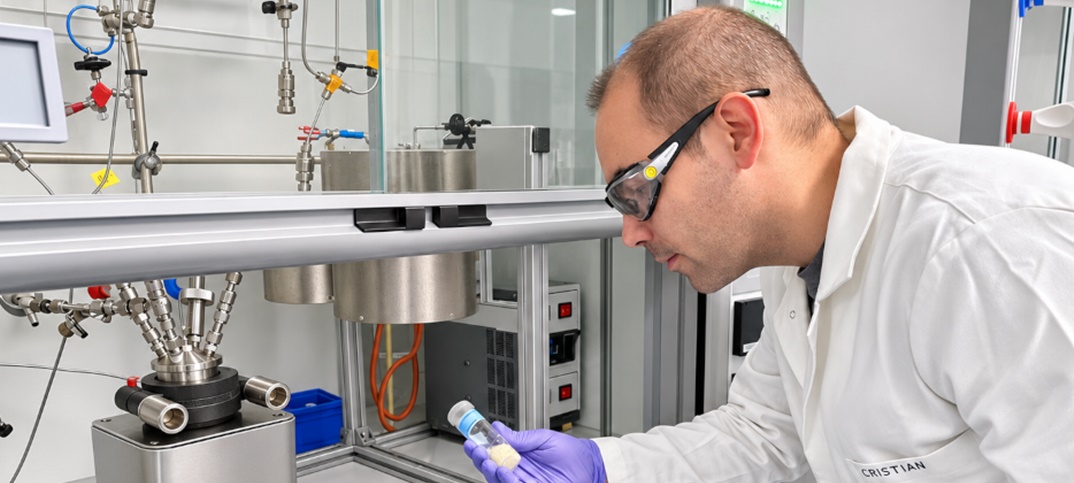
Within this framework, Aimplas is leading the development and validation of non-isocyanate polyurethane (NIPU) coatings, investigating new synthesis routes aimed at creating safer and more sustainable materials for potential applications in the furniture sector. These alternatives seek to avoid the use of isocyanates commonly employed in conventional polyurethane production through processes that incorporate CO₂ as a raw material to obtain polymer precursors.
The work includes the synthesis and optimisation of formulations, as well as the evaluation of technical properties such as adhesion, resistance and durability, taking into account industry requirements. In addition, Aimplas is generating experimental and process data to assess the environmental performance of these alternatives through Life Cycle Assessment (LCA) and integrate this information into the digital assistant being developed within the project.
„The challenge is not only to develop new materials, but also to ensure that these alternatives are technically viable and that their potential environmental benefits can be demonstrated through data. With „Ecopilot“, we aim to connect materials research with digital tools that help companies compare different solutions and make more informed decisions from the earliest stages of design. Our goal is to ensure that sustainability is no longer assessed only at the end of the development process but becomes an integral part of decision-making from the very beginning,“ says Cristian Torres, Ecopilot Project Leader at Aimplas.
The project also incorporates Social Life Cycle Assessment and Life Cycle Costing, supporting a broader understanding of sustainability that considers environmental, social and economic dimensions. By the end of the project, „Ecopilot“ aims to reach Technology Readiness Level 6 (TRL 6), demonstrating the project’s technologies in relevant environments. Through the development of a Conversational PEF Copilot, advanced sustainability datasets and innovative material solutions, „Ecopilot“ seeks to bridge the gap between complex sustainability science and practical product design, providing companies with more accessible and reliable tools to make safer and more sustainable design decisions.
Source: Aimplas