

On June 12th 2026 the JRC shared its revised proposal for EU-wide End-of-Waste (EoW) criteria for recycled aggregates derived from construction and demolition waste (CDW). The
undersigned industry associations (Aggregates Europe, Concrete Europe, EAPA, FEAD, FIR, Recycling Europe and FIEC) actively engaged with the JRC throughout the process of the
development of these criteria:
We appreciate that the JRC has made good progress considering the magnitude of the task given to them by the Commission. It is in response to this revised proposal that stakeholders share this political paper and its attached technical annex.
Stakeholders appreciate the work that has been done and welcome the EU Commission’s ambition to strengthen the circular economy. Industry looks forward to future opportunities to deepen engagement with the Commission. However, the latest proposal presented by the JRC continues to raise significant and serious concerns.
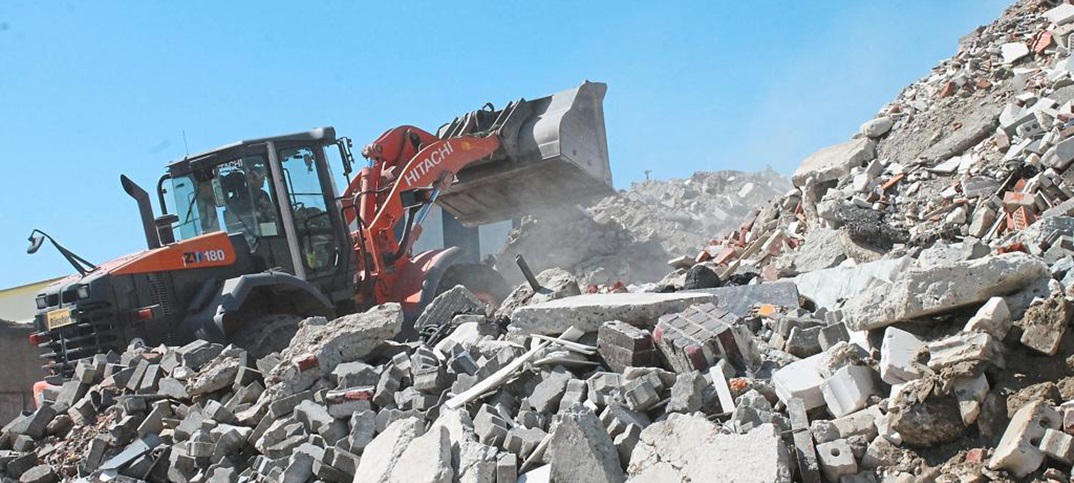
CDW represents the largest waste stream within Europe’s circular economy, accounting for around 25% of the total waste flow. It is therefore essential that any future EU EoW framework enhances the sector, rather than introducing new barriers that risk slowing circularity and reducing recycling activity. The Commission is currently pursuing a clear policy agenda centred on competitiveness, simplification, industrial resilience and the acceleration of circularity. The EU-wide EoW-criteria for Recycled Aggregates must be in line with these objectives.
End-of Waste must remain an enabling instrument
Additional administrative/testing burdens will inevitably increase costs and reduce the economic attractiveness of recycling activities. EoW must contribute to simplification and market certainty. They should not add any additional regulatory layers that create new administrative burdens on materials that are already subject to extensive environmental, health and product legislation, especially as CDW recycling is mainly carried out by local or regional operators, many of which are SMEs and due to distance, cross border trade of recycled aggregates is minimal.
The role of EoW should not be to duplicate obligations already addressed through existing EU legislation or established standards such as factory production control systems. Likewise recyclers should not be required to obtain additional documentary evidence concerning upstream processes that they cannot independently verify or control. If EoW criteria becomes too complex or restrictive, they are likely to produce the opposite of their intended effect with:
- fewer materials achieving EoW status
- lower recycling rates
- an increase in useable materials being landfilled
- reduced investment in circular business models.
Such a significant reduction of recycling (many millions of tonnes per year) would be inconsistent with Europe’s circular economy ambitions, especially in view of the objective of doubling the Circular Materials Use Rate (CMUR) from 11.8 to 24% by 2030, as set out in the Clean Industrial Deal.
Leaching limit values
Many Member States have already developed effective EoW systems adapted to their local environment, geological and market conditions. Industry believes that the EU-wide EoW criteria should function as a common baseline and minimum safeguard, while preserving sufficient flexibility for Member States to address local circumstances where justified. As it currently stands, the proposal introduces a significant risk of double-testing, which would add a substantial burden to producers and make the EU testing functionally useless.
This is particularly important regarding leaching limit values. Industry would welcome the harmonisation of leaching limit values, provided it is risk-based and fully aligned with harmonised standards. This scientific, risk-based methodology is fundamental as environmental conditions vary significantly throughout Europe. Geology, groundwater characteristics, climatic conditions, and established environmental protection frameworks are all different.
It is for this reason that, until such a scientifically based harmonisation is proposed, EU-wide EoW should not be obligatory in replacing existing national approaches to leaching. Member States with their own regulation on leaching should be allowed to opt out of the JRCs EU-wide limit proposals for domestic national use. In those countries where no framework exists the currently proposed limit values may be taken as a foundation and introduced by the Member States in question.
Regulation must be risk-based and proportionate
Better Regulation requires that regulatory obligations remain proportionate to the risks they seek to address. Industry is therefore concerned by an approach that would require the monitoring of a broad range of parameters irrespective of their actual relevance. Whilst industry recognises the positive steps that the JRC has taken, the selection of parameters and limits within any future EoW framework should be based on clear risk-based principles. Parameters should only be included if there is both a demonstrated environmental and/or human health impact, and a meaningful likelihood of occurrence in CDW waste streams or that any risk cannot be managed. That is to say, any list of parameters must remain focused on substances that are both high-impact and high-occurrence. An overly broad list of parameters risks creating significant compliance costs without delivering any tangible benefits.
Status of recycled aggregates not meeting EoW
It must be clarified that the proposed EU EoW criteria represent only one pathway for the use of recycled aggregates. It should not be interpreted as the only possible regulatory framework for their placement on the market. Not all recycled aggregates currently used in construction applications will meet the proposed EoW criteria. In many Member States there are several materials safely used under national frameworks while retaining waste status. Recycled aggregates that remain classified as waste should still be able to be placed on the market in those countries that currently allow so under existing European and national regulatory systems and in accordance with the Construction Products Regulation. Uncertainty on this point could harm an already sensitive market. The CPR does not exclude waste as a source material for construction products, so this alternative must be kept for manufacturers (see also attached legal notice by Mrs. Fehse). If EoW requirements of RA are to be included in the CPR, other comparable materials should also require EoW status to respect the level playing field between materials.
Avoid regulatory overlap and unintended consequences under REACH, POP and CLP
According to the JRC, output materials must demonstrably comply with regulations such as REACH, POP and CLP. Regulatory overlap and unintended consequences under REACH, POP and CLP should be avoided. Showing compliance must be done on a risk-based approach based on the input process. The Commission should keep testing limited to high occurrence high risk parameters.
Conclusion
Recycling has been a core part of the sector for well over 40 years now. As stressed in previous communications, stakeholders appreciate the support of the Commission in fomenting the circular economy in Europe. Industry has engaged with the JRC and Commission at every step of the process and strongly believes that mutually beneficial solutions can be reached through further constructive dialogue. In order to make sure that EoW is a success and the circular economy is protected and encouraged, industry reiterates the following points:
1. As a general rule, the list of substances to be tested should be based on risk-assessment, and should be limited to those of both high occurrence and high impact.
2. EoW should set minimum safeguard levels, not stringent thresholds.
3. Until a scientifically based harmonisation of leaching values is proposed, EU-wide EoW should not be obligatory in replacing existing national approaches.
4. Double testing must be avoided. Align the leaching test requirement with the European test standards that will have to be used for CE-marking anyway.
5. Waste should not be excluded from the market in those countries where it is currently permitted. It must be clarified that the proposed EU EoW criteria represent only one pathway for the use of recycled aggregates.
6. Regulatory overlap and unintended consequences under REACH, POP and CLP should be avoided.
7. Quality Management systems: harmonised product standards should be the basis of any EoW regulation, incorporating current factory production control methods.
8. In accordance with the principle of subsidiarity, EU-level EoW criteria should cover areas where EU level action is necessary and more effective than under national frameworks.
9. Simplification should be pursued. No double regulation. EoW should reduce bureaucratic burdens and avoid duplication of existing regulatory requirements. Terminology should be clear, consistent, and aligned with existing legislation and standards.
The undersigned industrial associations look forward to further engagement and cooperation with the Commission on this important file.
Source: Aggregates Europe, Concrete Europe, EAPA, FEAD, FIR, Recycling Europe, FIEC (Common Statement)