
… systematically work on solutions to react to this dynamic market“
Interview with Lukas Brandl, Managing Director BLC – The Battery Lifecycle Company.
ICM: Please give us a brief overview of BLC’s activities.
Lukas Brandl: BLC is a joint venture between the TSR Group and Rhenus Automotive. Our operations focus on the lifecycle of an EV battery – in particular, on the areas of repair, reuse and recycling – and we offer vehicle manufacturers solutions so that their EV batteries can be reused. By doing this, we are able to unite the world of standardised, logistical assembly processes with our knowledge of recycling a wide range of heterogeneous materials.
Our approach is, therefore, not only to concentrate on materials recycling. We also see ourselves as being a holistic service provider, developing bespoke solutions to meet the individual challenges of our partners. Alongside the business operations at our plants in Rheda-Wiedenbrück and Magdeburg and at our partner’s plant in the Austrian town of Hornstein, we also make the most of the TSR and Rhenus networks to offer our customers additional services, such as storing and transporting their batteries.
Besides dismantling, deactivating, sorting and packing the batteries to prepare them for recycling, we also work with battery storage (BESS) manufacturers. This work involves us checking the batteries to see if they can be used in stationary battery storage systems, differentiating between recycling and second-life use.
ICM: What is your approach to better repurposing and recycling and what makes it unique?
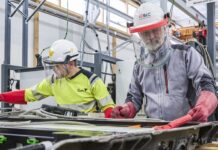
Lukas Brandl: The set-up of our production operations is extremely flexible. It allows us to adapt our processes to the various products and link together different steps. In other words, an operative may be working on a battery at a work station today – using special PPE and collection tanks – in which the modules are floating in cooling oil.
And then tomorrow they may be dismantling a series of home storage units which must each be processed within no more than just a few minutes. These systems allow us to be very versatile. What’s more, we are not just processing waste but products as well. We enable our partners to increase the value of their batteries by making sure they are given a second life.
ICM: How confident are you in the future development of this market?
Lukas Brandl: The market is both exciting and challenging. Over the last few years, all of the market players have experienced just how volatile the market can be and just how big the gap is between forecasts and reality. We believe that there are two key factors that are having a big impact on our industry. On the one hand, the start-up of e-mobility: we had all hoped that e-mobility would have been better established on the market by now. Vertical integration has also not yet reached the level in Europe that had been planned.
A consolidation of production activities automatically has an effect on the volumes available to us. On top of this, the share of imported EVs is gradually increasing, which means that fewer vehicles are being manufactured here in Europe. On the other hand, the service life of the batteries. I must always smile to myself when I listen to speeches at conferences and see the forecasts about the service life of lithium-ion batteries used in industrial units and vehicles.
To begin with, many people thought about the service life of the batteries in their smartphones, which begin to lose their output after 2 to 3 years. This meant that they had expected large volumes of batteries to be returned from the market. As each year goes by, however, both the technology and user behaviour have shown us that the batteries remain in the market for much longer and that the return of EoL batteries from the field is relatively low. The question is, therefore, when these volumes will reach us?
If the laws are systematically implemented, then we also know, though, that each EV and each battery storage system sold means that potential volumes have come onto the market for the industry.
As battery production is still being ramped up, there is a lot of innovation and optimisation work going on at the moment. This has had, for the most part, a positive impact on both production and performance. It also means new challenges for us, challenges that crop up on a regular basis. The creation of cell-to-pack design platforms does not really make our work easier and the use of different gluing technologies is a challenge for our sorting equipment.
We really would like producers to talk to us more when they develop their products and to actively take ‘design for recycling’ or at least ‘design for repair’ into account. On the other hand, this is also pushing us to be innovative and we are happy to take on these challenges and systematically work on solutions to react to this dynamic market.
ICM: Delegates at ICBR 2026 in Berlin will have the opportunity to visit your facility; what will they be able to see and experience during the plant tour?
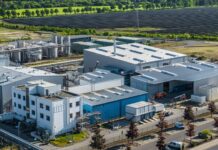
Lukas Brandl: First of all, I am really pleased that BLC is hosting the delegates this year. Our plant is located in a logistics hub in Magdeburg, making it ideally placed for us to reach the plants run by our customers and partners. We do not simply see batteries as a source of raw materials and focus on the metals in the cells. We take a holistic view – from the car through to the periphery metals that are recovered, for example, from the housing.
By working together with TSR and LRP, we have created a raw materials cluster that enables us to offer OEMs a holistic scheme for processing their ELVs. The facility is able to handle up to 15,000 tonnes a year, making it our biggest site at present. We are continuously further developing it and believe it has great potential. We have 30 employees at the facility at the moment who work in three shifts.
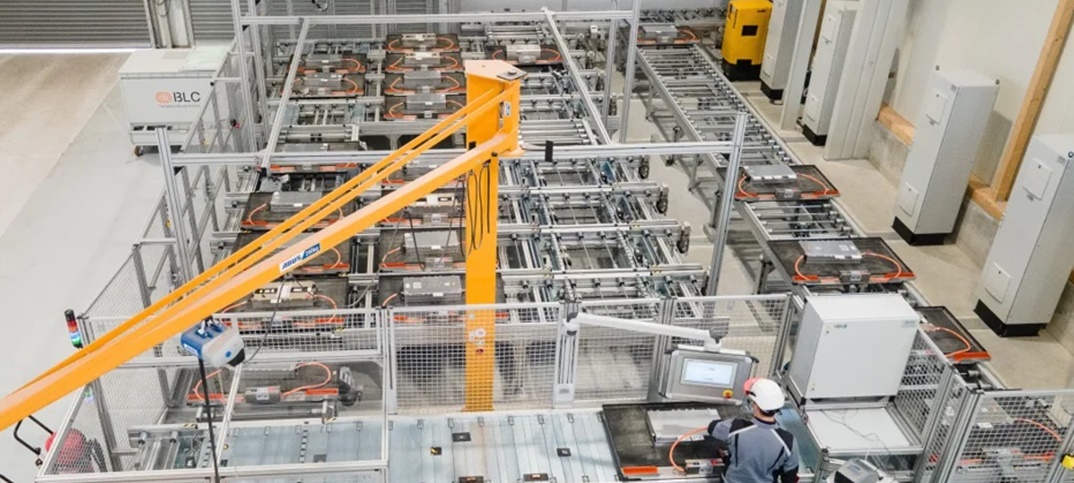
Looking at the technology there, we commissioned a semi-automated unit for deactivating battery modules two years ago. We are currently in the process of setting up a new flexible unit with the technology manufacturer No Canary that will be able to discharge a range of different products, from modules through to whole battery packs. This will not only make our process more flexible but also increase our discharge capacities.
We have been using two of No Canary’s mobile zero-voltage-discharge units since the beginning of 2025 and can successfully deactivate around one tonne of lithium-ion batteries an hour. With No Canary being based in Lehre, we have succeeded in finding a local partner for this project. The company has many years’ experience of battery recycling technology, which means that we can work together on projects to develop bespoke technology for our plant.
The delegates will, therefore, be able to get an in-depth overview of our operations. Our guests will be able to see how the whole of the process works – from dismantling the ELVs all the way through to packing the deactivated modules at BLC. We will also show them the different options, how batteries are deactivated and what challenges our recycling operations currently face.
Source: ICM AG